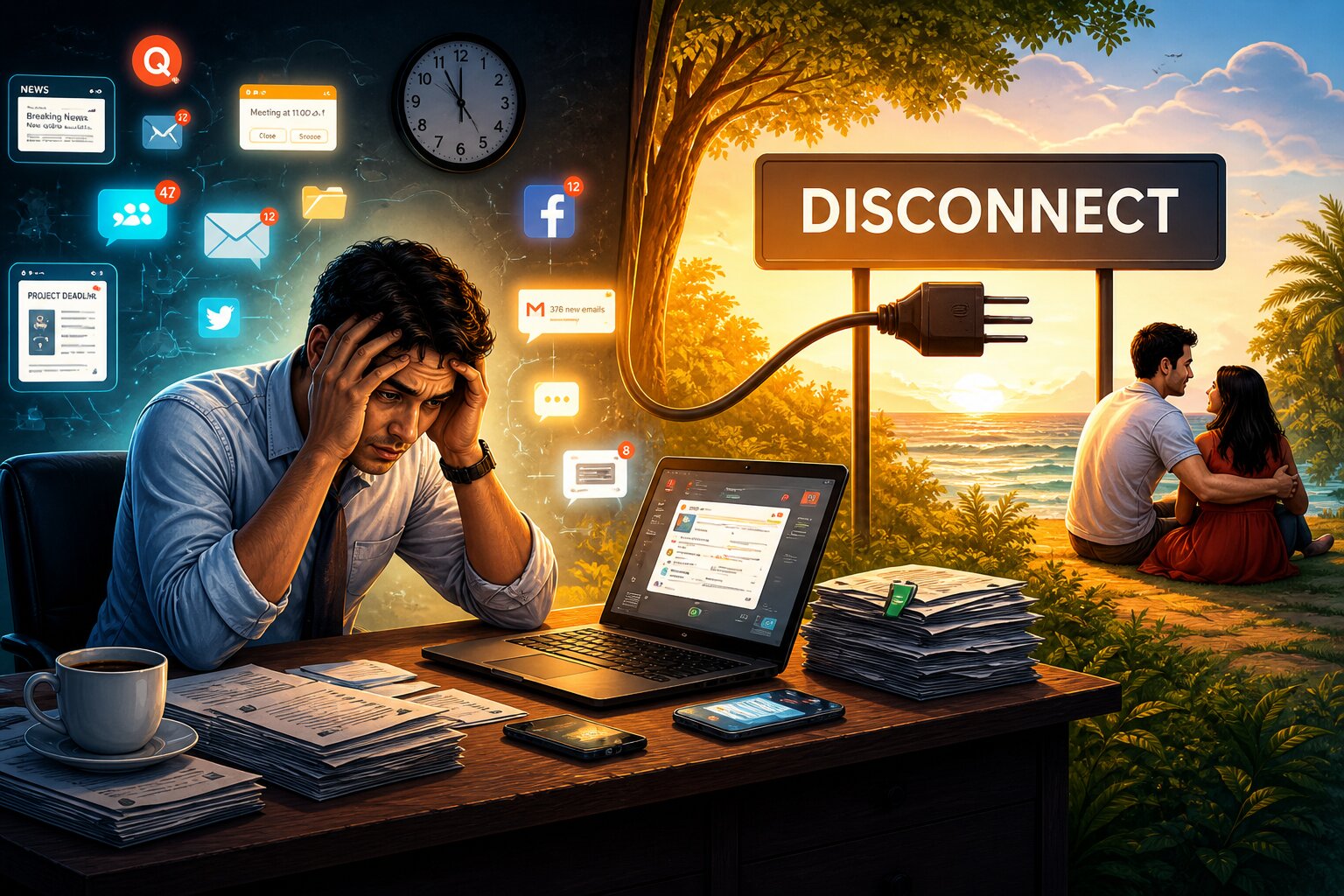
Logged In,
Burned Out

By Joshua Ruiz and Christian Perez

Take Control
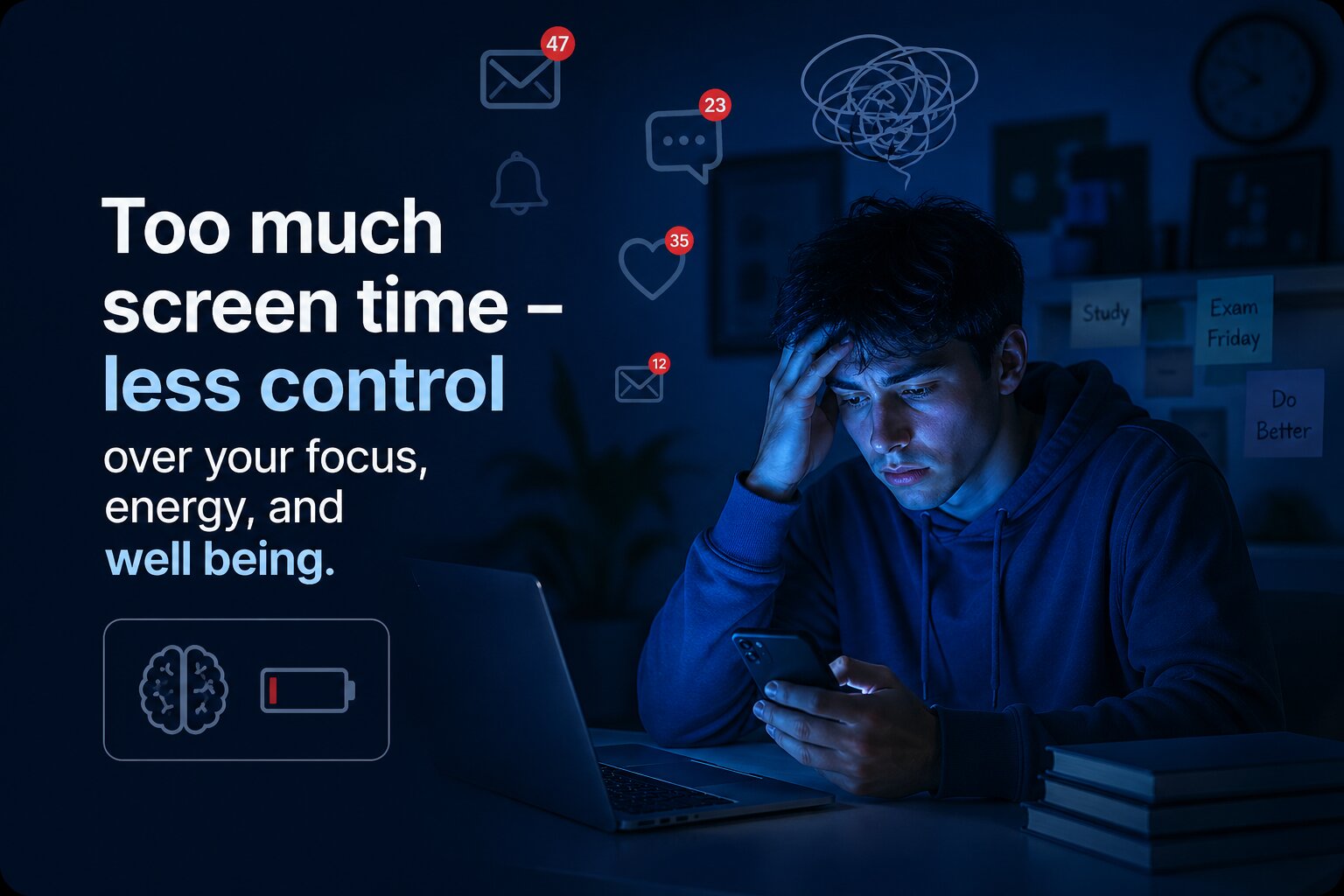
Student stressed while using laptop and phone

What is Digital Overload?

Digital overload is the constant exposure to screens, notifications, and online content that overwhelms your brain. For college students, it often comes from balancing academic work with heavy use of apps like TikTok, Instagram, Snapchat, and X.

This nonstop input makes it harder to focus, shortens attention span, and disrupts sleep, especially for Gen Z students who are always connected. Over time, it can lead to burnout, mental fatigue, and decreased productivity.
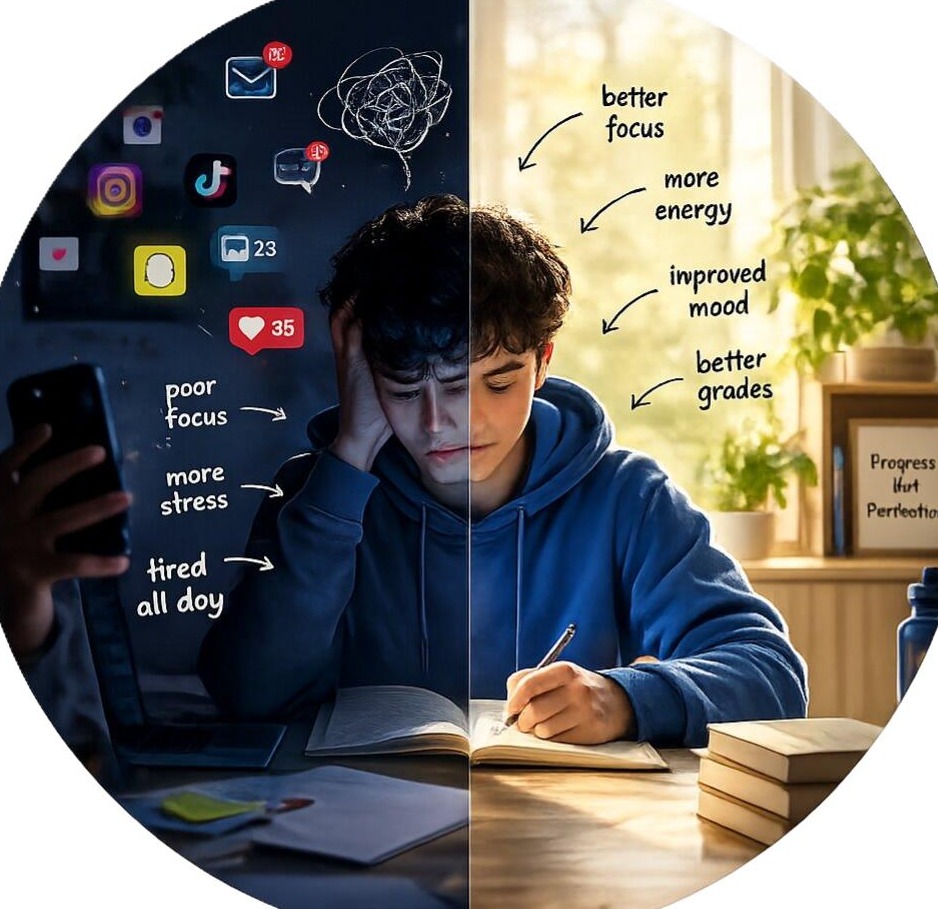
Student looking tired while using computer

Why It Matters for Students

Digital overload directly impacts how students learn, think, and function day-to-day. Constant screen use makes it harder to stay focused during lectures, complete assignments efficiently, and retain information.

Student studying with laptop and books
  • ๐Ÿง 
    Focus & Attention: Shorter attention spans, more distractions
  • ๐Ÿ˜ด
    Sleep: Late-night scrolling leads to poor rest
  • ๐Ÿ“š
    Academic Performance: Lower productivity and motivation
  • ๐Ÿ’ญ
    Mental Health: Increased stress, burnout, and fatigue

Real Student Experiences

โ€œBeing constantly surrounded by technology makes it harder and harder to deny myself the distraction. Nowadays, completing assignments requires using this technology. Even for the most self-disciplined, digital distractions can turn a twenty-minute assignment into a multiple-hour endeavor.โ€

- Cal State LA Student

โ€œI believe digital overload has affected me and the majority of my peers in a negative manner, as it has become a necessity. I relied on technology for my academics and free time, leading to my inability to go without it. During my time at CSULA, technology caused distractions and a limited amount of interaction between students.โ€

- Cal State LA Student

โ€œDigital overload makes it hard for me to be present in the moment. I find myself constantly checking my phone, even when I know I should be focusing on my studies or spending time with friends and family. It's exhausting trying to keep up with everything online, and it leaves me feeling more stressed and less productive.โ€

- Cal State LA Student

The Science Behind Digital Overload

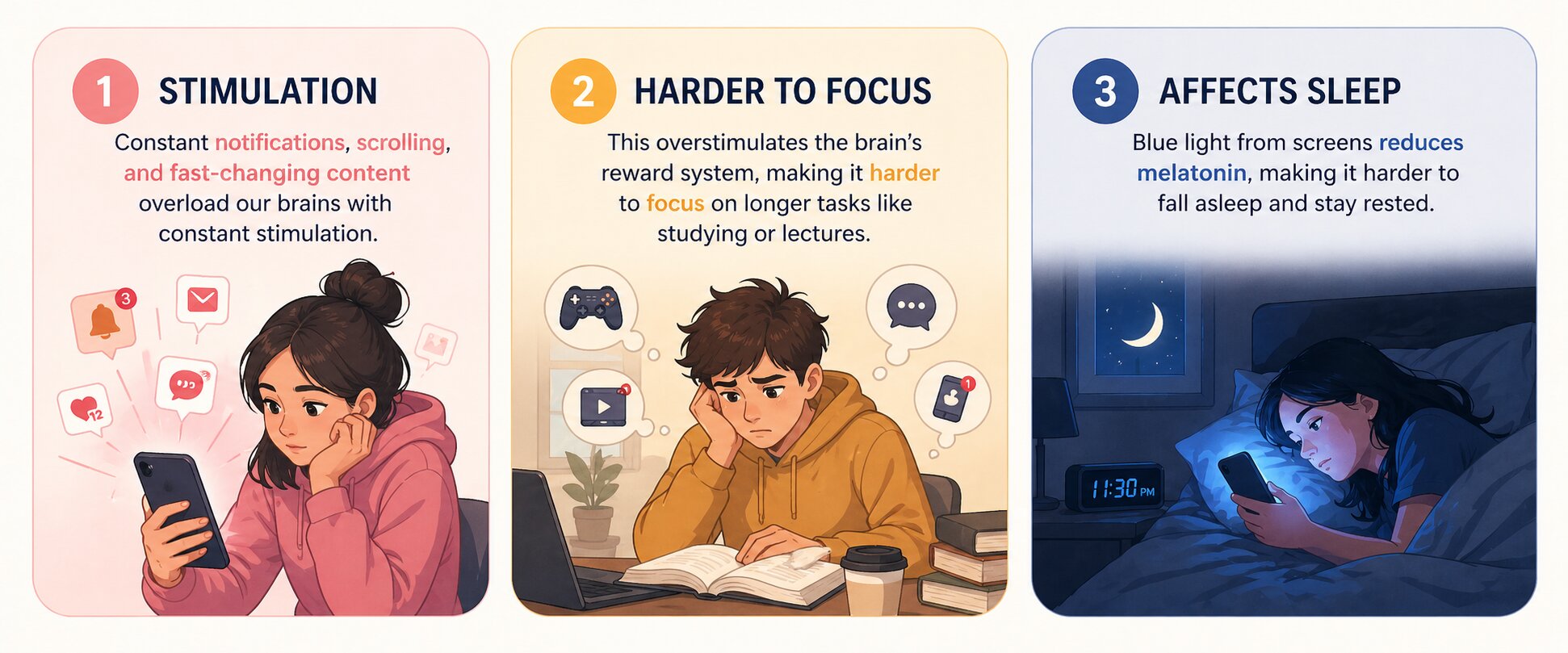
Constant screen use changes how your brain handles attention and rewards. Frequent notifications and scrolling trigger dopamine, training your brain to expect quick stimulation. This makes it harder to focus on longer tasks like studying or lectures.

It also affects sleep. Blue light from screens reduces melatonin, making it harder to fall asleep and stay rested, especially when students use phones close to bedtime. For more on the research behind digital overload and sleep, see GoodRx and the ร–zbay study.

Three steps of digital overload: stimulation, harder to focus, affects sleep